

https://www.independent.co.uk/news/nepal-china-kathmandu-himalayan-research-b2801936.html
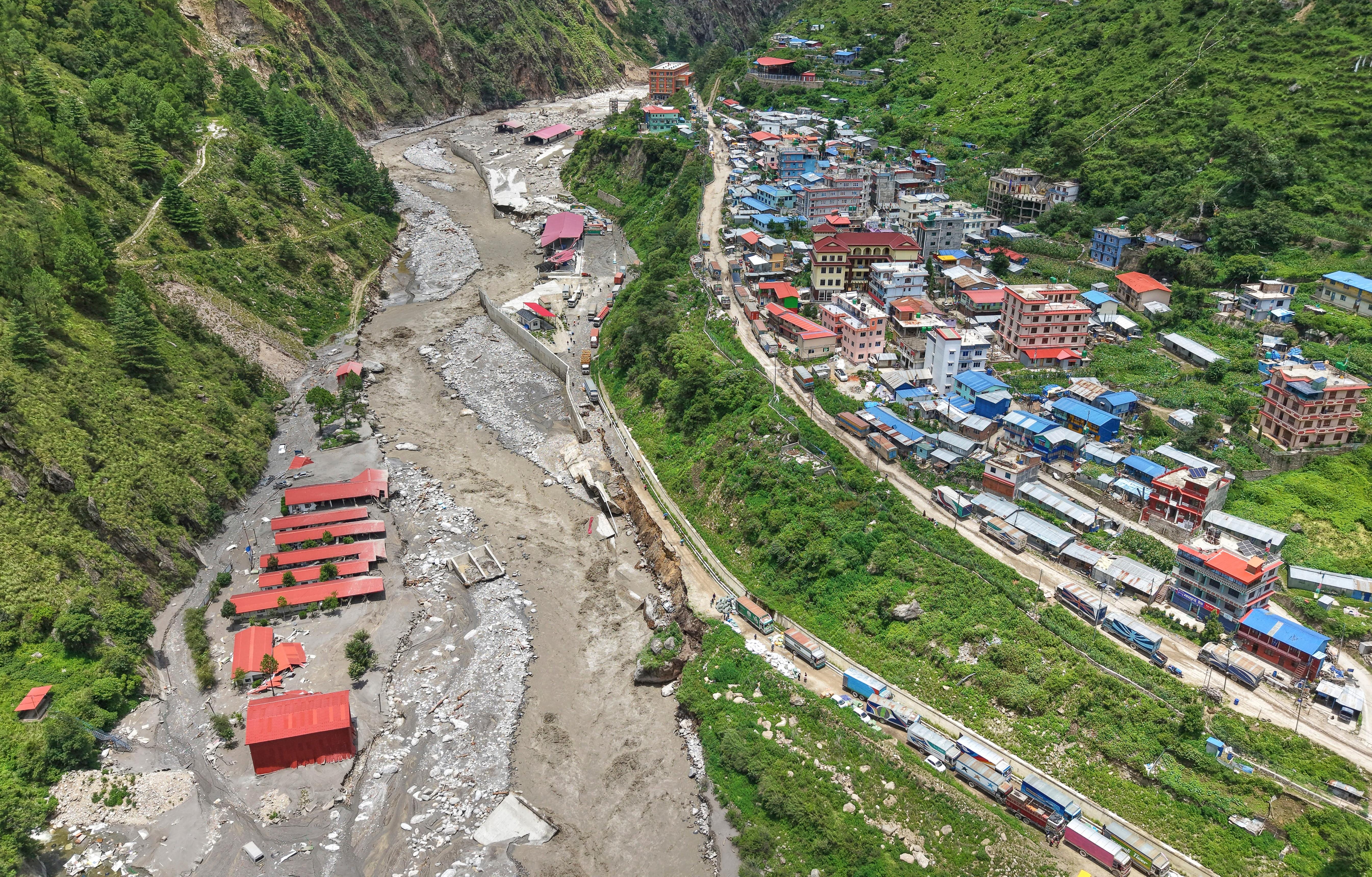
After the devastating flash floods that took place in Nepal in late August, Médecins Sans Frontières (MSF) declared that an emergency team had reached the country to assess the needs of the affected communities.
The statement was fairly boilerplate stuff, often put out by international humanitarian organisations, it discussed the flooding, mentioned the speed at which MSF had deployed and noted the organisation’s readiness to offer help; it also recognised that the Nepalese authorities had started their own emergency response.
A less typical response then appeared on my linkedin feed.
Ian Norton, a doctor and expert in emergency response, publicly criticised the decision to send an assessment team. He argued that Nepal already had experienced emergency responders, working institutions and a well-established understanding of the probable consequences of severe flooding.
He suggested that international governments and NGO’s should support local organisations already taking action rather than using their resources for further assessments. It was a rather searing criticism, especially considering MSF’s standing, but it showed a frustration which has been growing within the humanitarian sector for a while.
During part of my career as a nurse, I worked for MSF and have great respect for its operational abilities and its ability to reach areas others cannot; when it fires on all cylinders, few organisations are comparable. I have also worked extensively in Nepal, with the Ministry, doctors, and nurses; I was privileged to witness their hospitals and health system. There is much to admire in the Nepali health system whilst remaining realistic about its challenges.
What interested me about the exchange was that it revealed something more fundamental about how international humanitarian assistance continues to operate.
Assessing needs, or assessing whether help is needed?
It is necessary to make a clear distinction between evaluating the needs of a population and deciding whether or not an international organisation has anything useful to offer in relation to an existing response.
A major flood is likely to lead to a demand for shelter, clean water, sanitation and medical care, even if health facilities are still operating, transport disruptions can stop people from getting to them.
The mere fact that such needs exist does not prove that an extra international medical team is the answer.
To work out what kind of help would be useful there is a clear need to have an understanding of the response which is already taking place. This involves knowing what sort of services the nation can offer, identifying where those services are under pressure and also deciding whether the gaps can be dealt with more efficiently by giving support to the existing organisations or government health system.
Nepal possesses a great deal of experience in dealing with disasters; its emergency management systems have evolved as a result of various earthquakes, floods and other emergencies. After the flooding in August, the Nepal Red Cross Society set up its emergency operations centre and sent out response teams, while the government agencies organised search, rescue and relief operations.
Any external organisation considering action should have used this existing capability as its starting point.
There are valid reasons for carrying out assessments, such as obtaining independent ones. National information systems can become overloaded, and as a result, some isolated communities may be overlooked. Authorities do not always fully understand the situation, particularly when communication and transport networks are damaged. Moreover, certain populations might also be poorly represented in official reports.
An international organisation need not give up its duty to understand the needs of people who might otherwise be overlooked in order to accept national leadership, it’s not, in my view, an either or.
What happened next
MSF then issued another statement on 8 September.
The teams went to the communities that were affected and to the health facilities, and talked to both local and national authorities. They found that the humanitarian effort led by the government was effectively meeting the immediate needs.
Therefore MSF decided against launching emergency operations in Nepal.
It is a valid result of an assessment. In fact, the do not proceed option is a sign of organisational maturity; however, it is also worthwhile looking into the way the first deployment was described.
When communicating at the beginning, MSF (perhaps as a reflex) stressed the arrival of its team and its willingness to provide assistance. The later statement, by contrast, focused much more on the work already being carried out by the Nepalese authorities and the communities.
Although public communication might appear to be a rather small matter during a crisis, it does affect the way humanitarian efforts are perceived. International organisations stand out because they have dedicated communication teams, well-known brands, and access to the international media. It is sometimes the arrival of these organisations that becomes the focus of the news, even though the major work is actually being done by people who were already present.
It is important for fundraising and for public expectations and might also affect the way organisations show their value to supporters and donors.
We have been discussing localisation for years
For much of the last decade the humanitarian sector has been concentrating on localisation, which is the term used for the measures aimed at enabling national and local organisations to have greater control over humanitarian aid.
The Grand Bargain of 2016 pledged to direct at least 25 per cent of humanitarian funding to local and national organisations as directly as possible.
Progress remains limited.
A 2026 ODI Global report estimated that less than 10% of international humanitarian funding reached local and national actors, directly or indirectly, in 2024. Direct funding accounted for only 3.8%.
The report also discovered that local organisations usually received grants which were smaller, shorter and more restricted than those received by their international counterparts.
These figures make it clear why it has been simpler to alter the language of humanitarian assistance than to change its organisation.
International agencies often hold contracts from donors, manage budgets, and determine how resources are distributed. Although national organisations carry out a great deal of the implementation work, they have only limited influence regarding the design of the response.
This situation is especially important in cases where decisions have to be made under pressure. The organisation in control of the funds might decide that further evidence is necessary before the resources are released, even if the experienced national responders have already determined what is needed.
There are genuine concerns regarding accountability and financial oversight in this situation. Donors want to see proof that their funds are being used in the right way. Yet such arrangements may result in a situation where local expertise has to have plans and finance flows repeatedly checked over by external organisations before it can be put into action.
The perspective from nursing
The effects of such decisions are especially obvious for nurses.
After a major disaster, one of the most important aspects of healthcare is ensuring that the services which were previously in place continue to operate. Patients still need their medicines, women still have babies and people with long-term conditions still require monitoring and treatment.
The nurses who provide these services are usually working in the communities that are affected.
They are aware of the referral arrangements, the limitations regarding staffing, and the practical difficulties involved in providing care. They might also know which patients are especially vulnerable and which services are likely to have problems when the roads become impassable.
There is also a wider professional concern since humanitarian medicine is still often shown in terms of the activities of international organisations and their deployed specialists, while the role of nurses who are recruited at a national level and other healthcare professionals is given less attention.
This is an inaccurate picture of the way healthcare is really provided in the majority of humanitarian situations.
An international evaluation which starts with the local nursing services, makes use of the information already available and regards those who are in charge of the continuing care as the decision-makers is likely to arrive at different priorities from one that is based mainly on the capabilities of the incoming medical team.
International assistance still has an important role
There is a great deal of difference between governments in their capacity and readiness to respond. In some cases the emergency exceeds the resources of the national services. When there is conflict the state’s institutions might be engaging in violence or discrimination, which is why independent humanitarian action is necessary.
Nepal has itself offered a useful historical example. A study carried out in 2019 on the international medical response to the 2015 earthquake recorded 137 Emergency Medical Teams coming from 36 countries. Yet the authors pointed out that there were still problems relating to coordination, reporting and quality assurance, even though there had been some improvements when compared with earlier disasters.
There are also boundaries to an uncritical admiration of local leadership since national authorities and local organisations each have their own hierarchies and competing interests and their priorities do not always correspond with those of marginalised communities.
A response that is organised locally still requires independent scrutiny, decisions that can be held accountable and real participation from the people affected.
What Nepal tells us
The stances taken by MSF and Ian Norton might surely be summed up as a dispute over whether international assessment teams are useful, but there is a bigger point too.
The fact that MSF came to that conclusion shows that it was ready to accept the idea that its intervention had been unnecessary is important, at the same time, Norton’s criticism drew attention to the situation of the Nepalese responders, highlighting the fact that their capabilities could be overlooked because of the prominence of the international organisations.
These developments are also part of the general discussion on localisation.
In the case of nursing, it is necessary to realise that the individuals who provide care before a disaster, during the emergency and in the recovery phase are generally the ones best able to explain how the health system is faring.
While there is broad support in principle for local leadership, the actual decisions regarding expertise, resources and the manner of support seem to be much harder to enact than to verbalise.